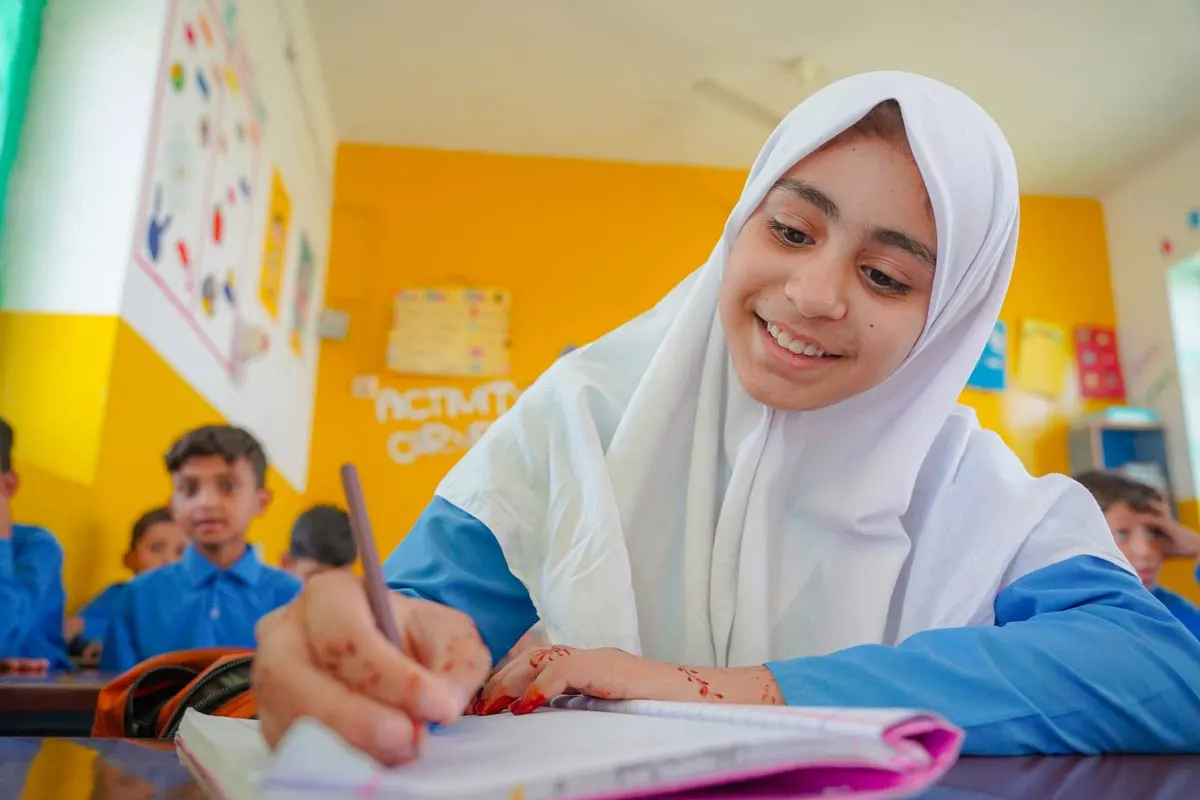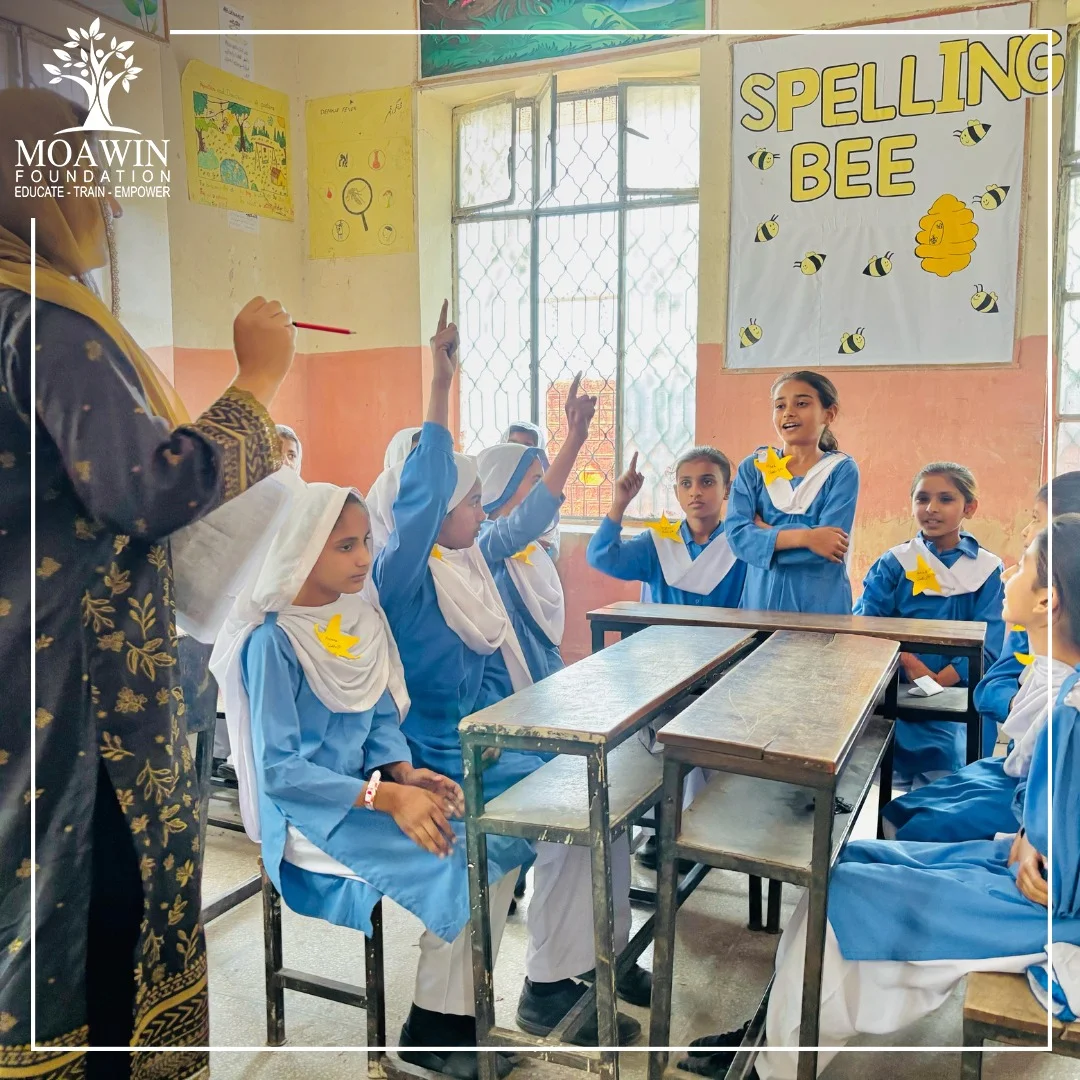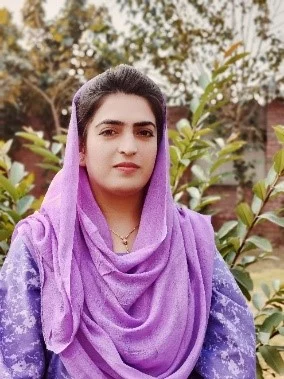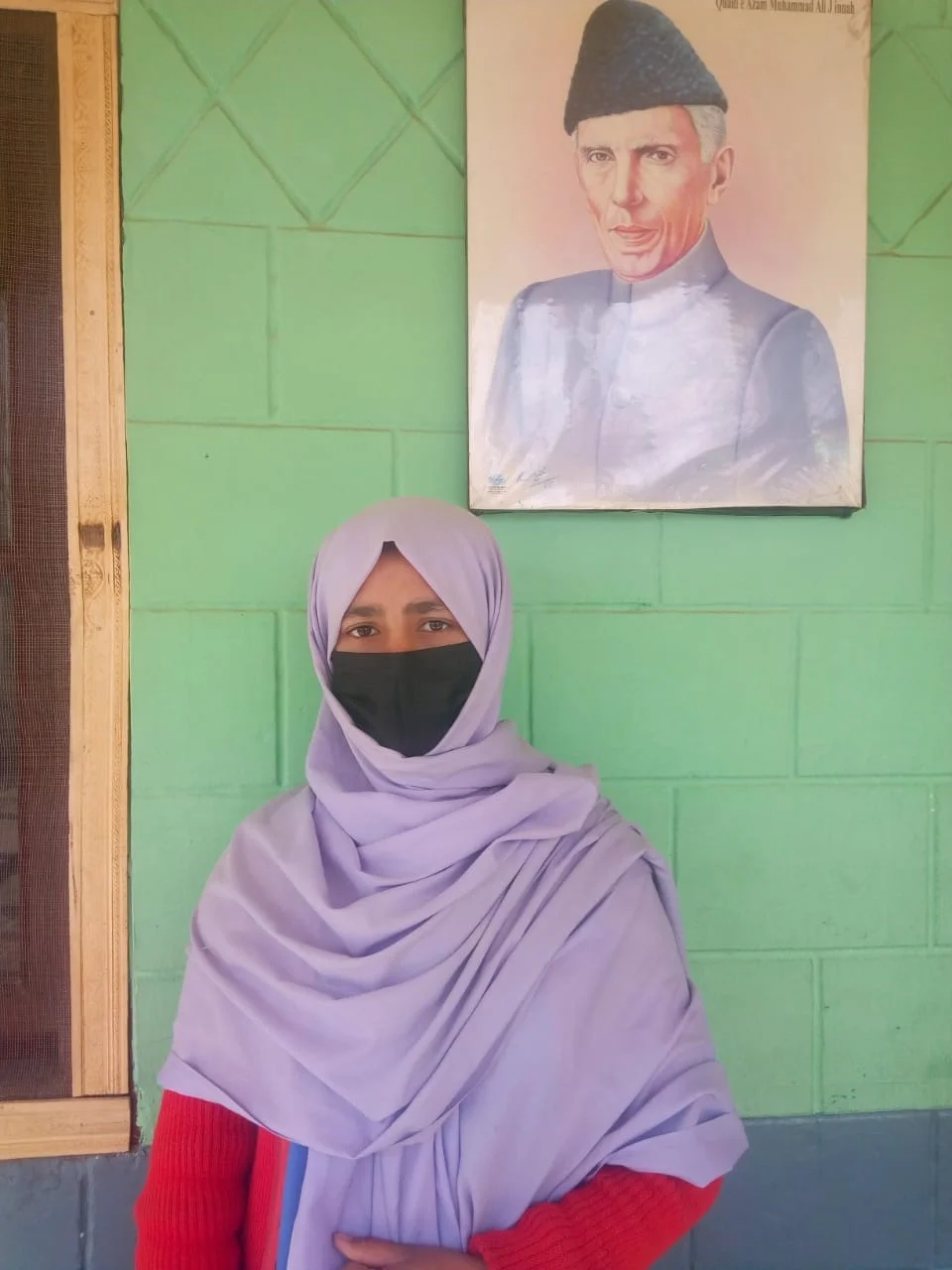
At Government Model Primary School Sauwal, a quiet struggle was playing out in a Grade 5 classroom. Ammara Yasmeen, just 9 years old, was working as hard as any student in her class — but Urdu kept slipping out of reach.
When Effort Isn’t Enough
For Ammara, Urdu wasn’t just another subject on the timetable. It was a daily source of difficulty. Reading words, recognizing vocabulary, and putting sentences together in writing all felt harder than they should have. Her teachers guided her, her family supported her with practice at home, and still, progress stayed frustratingly slow.
It’s a familiar pattern in classrooms across Pakistan: a capable, hardworking student who simply hasn’t found the approach that clicks for her yet.
A New Way to Learn
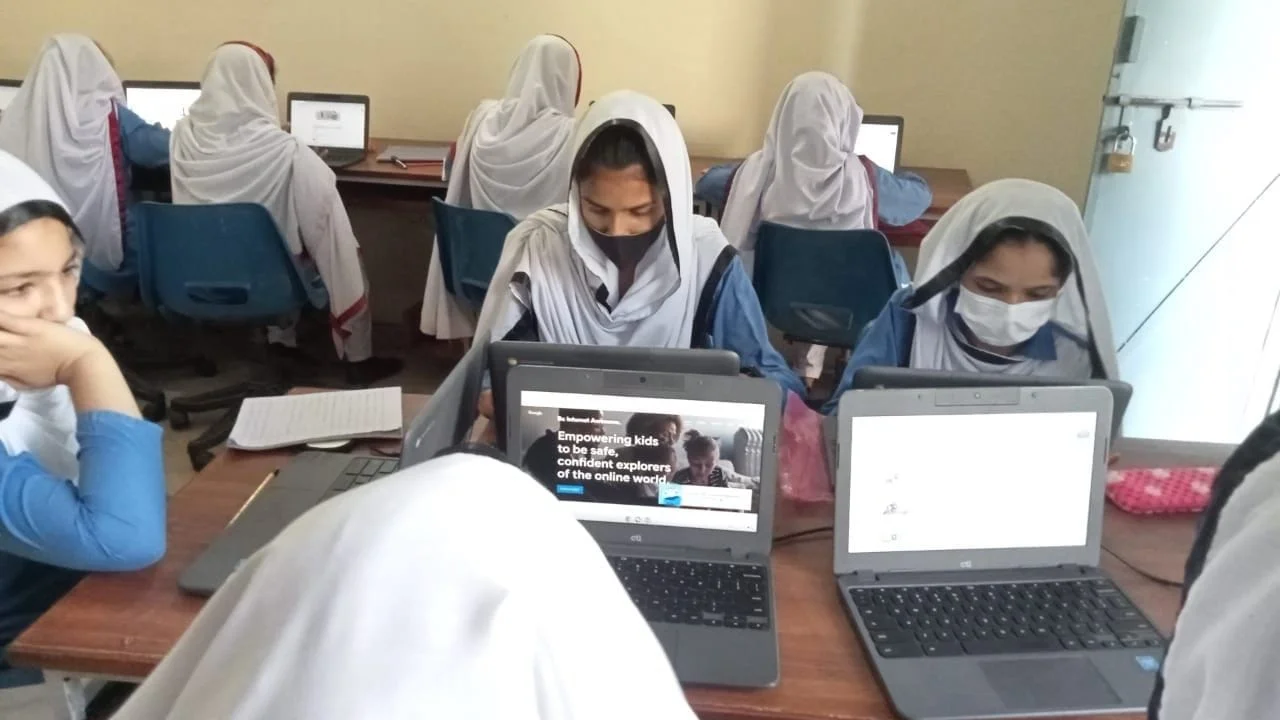
That changed when Moawin Foundation’s E-Learning program, delivered in partnership with Taleemabad, brought the Urdu Literacy Program into her school. Instead of static textbook drills, lessons came alive through animated videos, real-life examples, and interactive content.
Concepts that once felt abstract and difficult suddenly had context. Words weren’t just symbols to memorize — they were part of stories, characters, and situations Ammara could actually picture.
The Numbers Tell Part of the Story
Ammara’s Urdu teacher, Ms. Sumair Yasmeen, had watched her struggle for a while. Reading, vocabulary, sentence-writing — all of it lagged behind her other subjects, and Ammara often hesitated to speak up during Urdu activities, even though she was engaged and willing everywhere else.
With regular exposure to Taleemabad’s videos and consistent quiz practice, that started to shift. Ammara began reading with more confidence, recognizing words accurately, and expressing her ideas more clearly in writing.
The results were hard to miss: her Urdu test scores climbed from 30% to 90%.
What Changed Wasn’t Just Her Grades
Test scores are one measure, but the more telling change happened in how Ammara showed up in class. She started participating in discussions she used to sit out of, engaging openly instead of holding back.
Her reading ability improved just as sharply — she can now read Urdu passages with roughly 95% accuracy, a level that reflects real fluency, not just memorization.
Why Ammara’s Story Matters
Ammara’s turnaround is a reminder that struggling with a subject isn’t always about ability — sometimes it’s about finding the right way in. With the right tools and consistent support, students who feel stuck can move past that barrier and rebuild both their skills and their confidence.
Partnerships like the one between Moawin Foundation and Taleemabad are making that kind of shift possible in more classrooms, turning foundational education into something engaging and effective — especially in underserved communities where students like Ammara are often working the hardest with the least support.